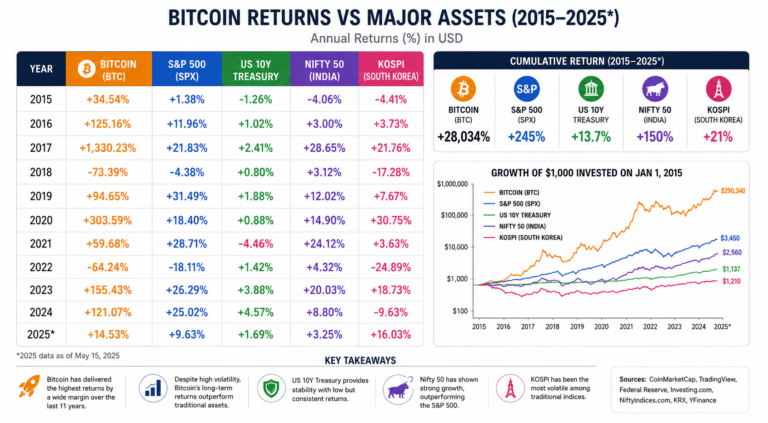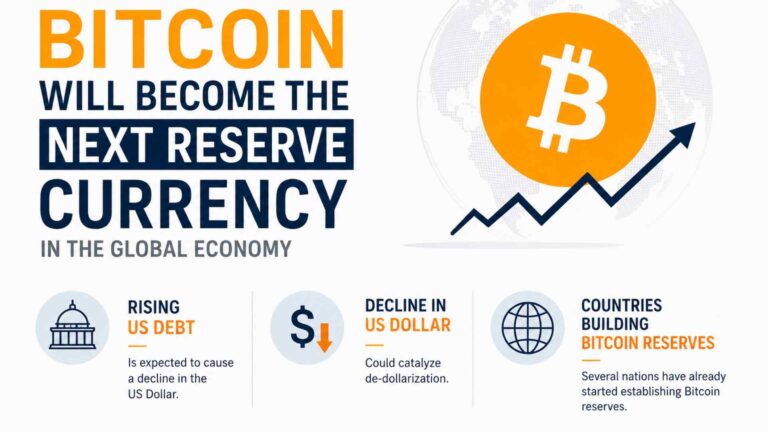


Bitcoin has been falling for the last 9 months due to a short-term bear market driven by low investor confidence, low market liquidity, a market rotation toward Gold and AI, and low market demand due to inflation.
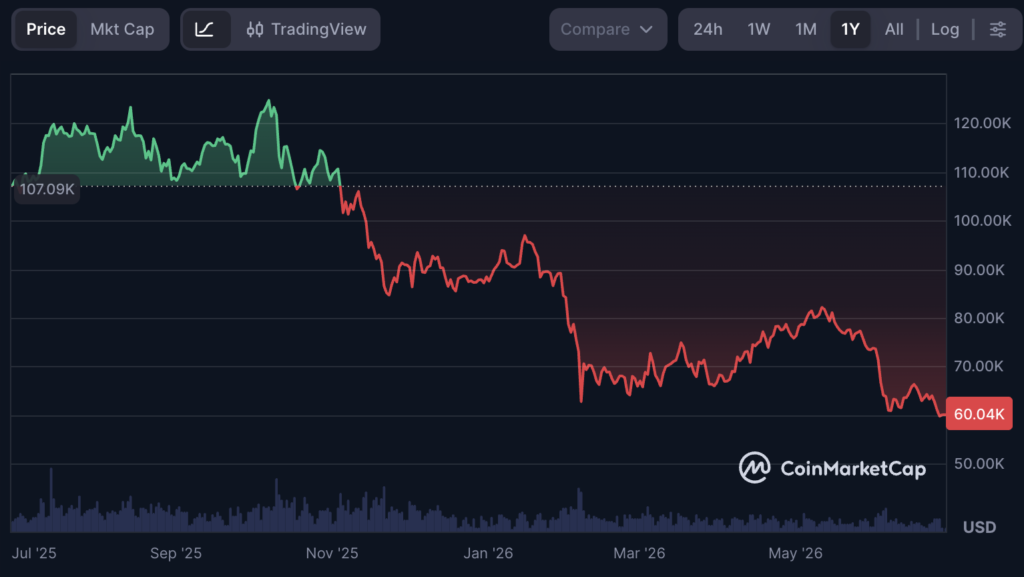
The fall began in early October 2025, when an overbought market entered correction mode due to extreme longs and uncertain economic conditions. There were already geo-economic factors like trade wars and conflict that created FUD in October. This crash became popular by the name of 10/10 Crash as it happened on the 10th of October (which is the 10th month).
These bearish factors caused a price drawdown, liquidating billions of long trades. The cascading effect of liquidations caused the market to crash rapidly to $60k by Feb 2026, representing nearly a 50% decline from the October 2025 highs of $126k.
New factors such as conflict, supply chain issues, and the AI bull run caused further liquidity to exit the crypto markets. I have listed all of these factors below in detail.
1. Low Market Liquidity
Crypto markets have been battling low liquidity since 2022, when the US Federal Reserve started hiking interest rates. The result of higher interest rates was that it provided investors with higher returns on bonds and treasuries, making volatile assets like Bitcoin and stocks less attractive.
Further, higher interest rates also caused loan repayments to increase, removing the excess investing power from the economy.
As a result, investments suffered, including Bitcoin.
2. Market Rotation from Crypto to Gold and AI
Market rotations are common in financial markets, and being active in them since 2015, I have seen multiple rotations.
A market rotation is a phenomenon in which a market’s profit potential slows, prompting investors to pull money out and invest in more profitable markets.
For crypto markets, investors pulled their money out around October 2025 and invested primarily in Gold and AI stocks.
2.1. Gold Rally
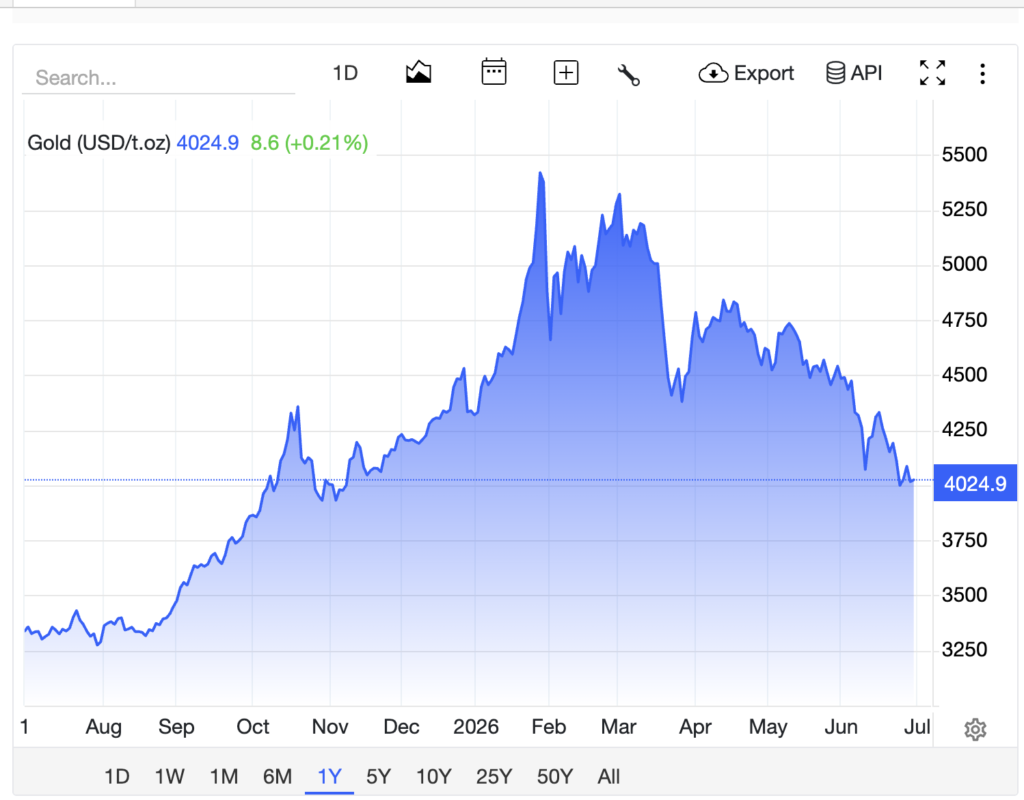
Gold had one of the most spectacular rallies in late 2025 and early 2026, caused by geopolitical uncertainties. The price rose from $3,600 per ounce in Aug 2025 to $5,300 per ounce in March 2026. As with any other rally, rising markets attract investors from other markets, in this case, from crypto.
2.2. AI Stocks-led Equity Rally
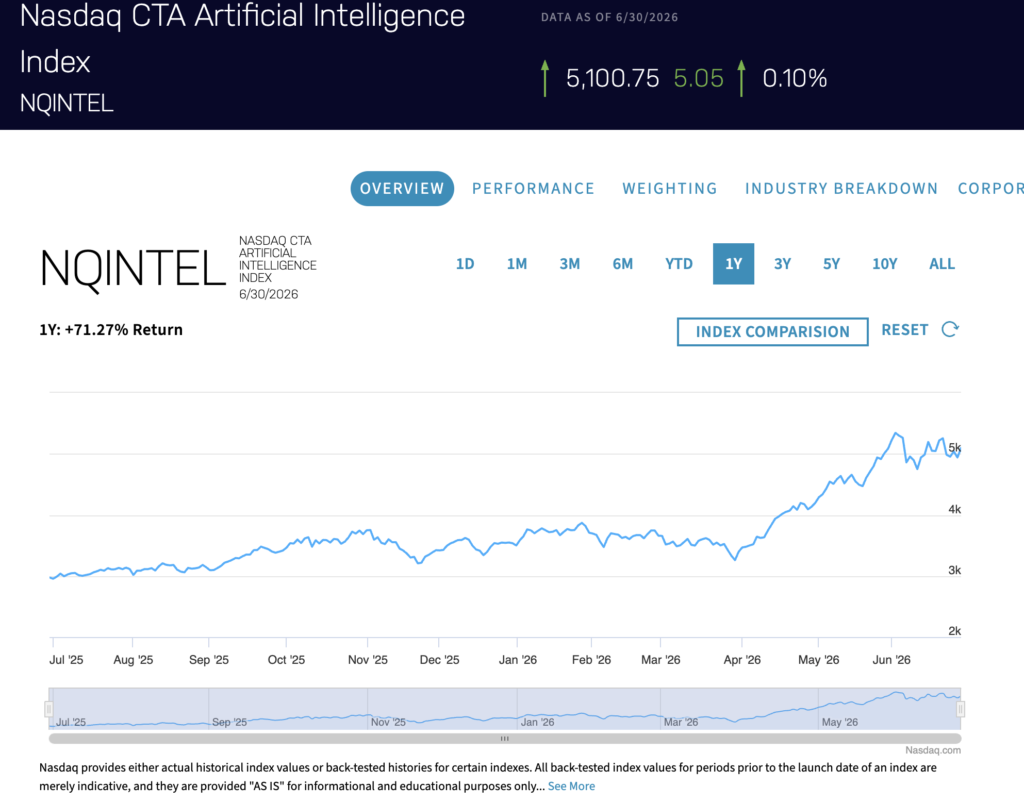
A similar rally occurred in AI-led tech stocks due to rising demand for AI applications. AI native stocks as well as AI-allied hardware industry, such as memory, RAM, processor, GPU, etc., manufacturers, saw a rapid rise in demand.
Between March 2026 and June 2026, these stocks, represented by the NASDAQ CTA AI Index, rose from $3300 to $5300. This too attracted money from crypto markets, worsening the crash in crypto prices.
3. Low Investor Confidence
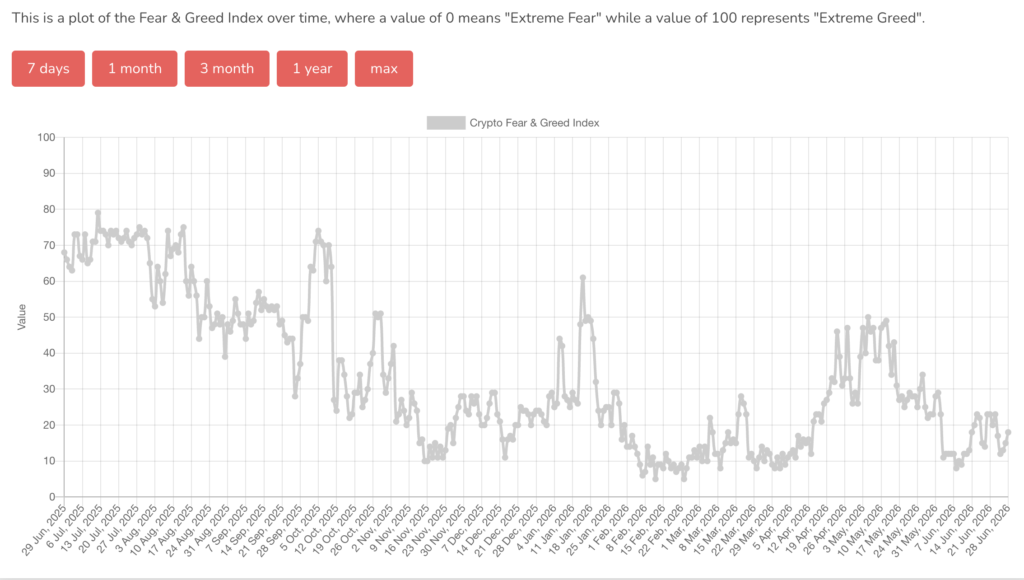
As with any falling market, there is a plight of investors in crypto too. The 10/10 crash triggered a massive exodus from crypto because, in less than 6 months (Oct-Feb), the crypto market cap collapsed to 50% of its October highs, scaring both institutional and retail investors.
3.1. Bitcoin Fear and Greed Index
The result of this exodus was that those still in the market saw their confidence drop to extreme fear levels. The chart below shows the investor confidence (measured by Bitcoin Fear and Greed Index) for the last 1 year.
4. Less Retail Demand
Retail demand waned after the 10/10 crash due to a sharp fall in crypto prices.
4.1. Spot Demand
Spot demand for cryptocurrencies has declined by more than 50% since the October 10th crash (the 10/10 crash). Number-wise, the crash has brought down CEX volumes from $2.23 trillion in Oct 2025 to less than $1 trillion ($910 billion) in June 2026.
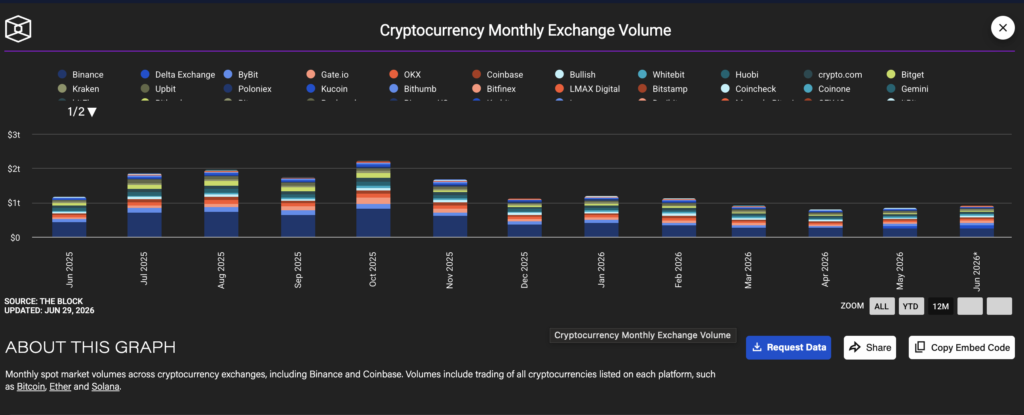
Spot volumes (which are mostly retail) are critical because retail volumes far exceed institutional volumes on an average day. Therefore, a weak retail market leads to a fall in Bitcoin prices.
4.2. ETF Demand
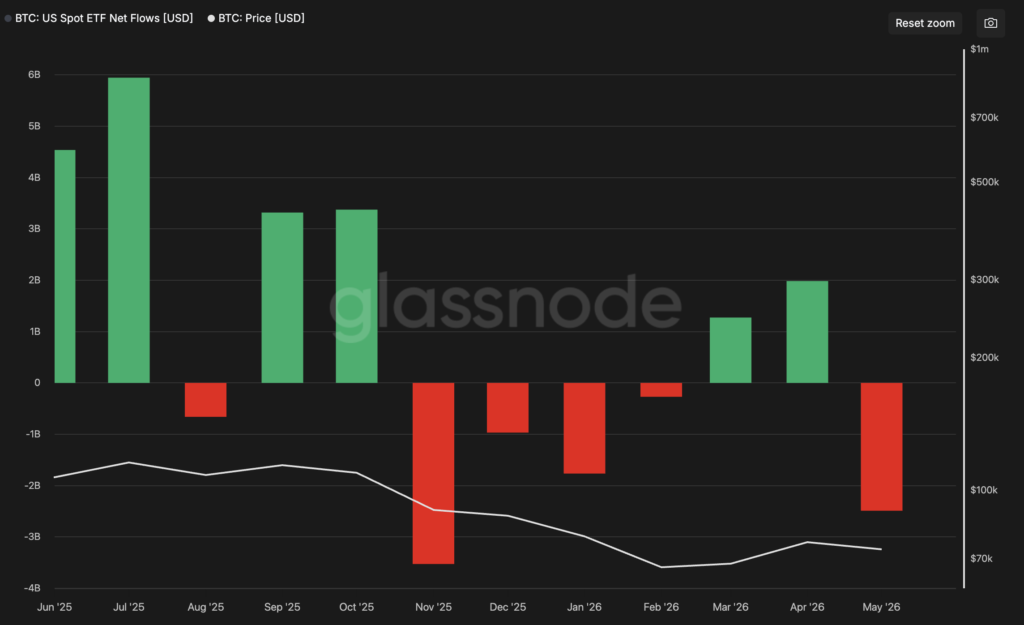
The ETF markets, too, have witnessed a significant decline in net flows. Before October 2025, ETFs had a net inflow. However, in recent months, this has become a net outflow situation as shown in the picture below.
5. Less Institutional Demand
Waning institutional demand is a key driver of Bitcoin’s crash because after the 10/10 crash, I saw retail demand disappear from the markets. It was institutional demand that helped Bitcoin hold on to its $60k support level. Now, that support seems a little uncertain because most institutions, too, have been running out of liquidity.
5.1. Strategy Loses Investor Confidence
Strategy did test sell transaction of 32 BTC, and the follow-up by the company led to a complete media relations disaster worse than any I have seen in crypto markets.
Between May 26 and 31, Strategy sold 32 BTC in a move that provided the reason it needed to sell to pay dividends. The markets saw this as a technical sell rather than a strategic move.
A few days later, around mid-June, Strategy Chairman Michael Saylor disclosed it as a test transaction, proving that the previous statement was a lie indeed. He further said that he needed to see his stakeholder benefits, which were understandable. However, his next statement sparked another controversy.
Saylor said that he never said he wouldn’t sell his Bitcoins or his company’s Bitcoins, and rather advised people not to sell their own Bitcoins. This was quickly proven wrong with an old video where Saylor was seen saying that “his company”, i.e., Strategy (then MicroStrategy), would never sell Bitcoins.
These lies disrupted market confidence in Saylor and Strategy, who has until now been regarded as the Institutional Bitcoin Treasury Pioneer.
5.2. Treasuries Hold Back Purchases
Most treasuries, except Strategy, have held back on Bitcoin purchases, fearing long-lasting global uncertainty in geopolitics. Further, as major economies combat recession, a slowdown in investment is expected. Such times result in stagflation. In such times, it gets difficult to raise money to buy Bitcoins or any volatile asset.
When is Bitcoin expected to Recover?
No one can actually predict when Bitcoin will return to above $100k levels or a new ATH.
However, most of us understand the reasons why it is falling. So for a recovery, these factors need to be aligned with Bitcoin. The most important ones are:
- Interest rates in the US and in major Bitcoin markets like Japan and India need to be around pre-COVID levels. The volatility in the current markets is caused by endless lending during COVID, the resulting inflation around the world, and the subsequent rate hikes to stabilize inflation. For the US, these interest rates are around 1.5%.
- Crypto markets need to provide some real utility to the world, which is necessary to attract new capital flow into the markets. Here, some progress has already been made in RWAs.
- The growth in Gold and AI stocks has to taper off, which has already set in since June 2026.
The above factors could boost investor demand, which is expected to, in turn, lift Bitcoin prices.
In my personal opinion as a financial analyst, this could happen around the end of 2026.
Disclaimer: Bitcoin News does not contain any financial advice. All information provided here is educational only. Kindly consult your financial advisor before investing or trading.